
-1.png)
Table of Contents
Like this article?
Subscribe to our Linkedin Newsletter to receive more educational content
Subscribe now
Customer-Facing Reliability Powered by Service-Level Objectives
Service Availability Powered by Service-Level Objectives
Learn More
Integrate with your existing monitoring tools to create simple and composite SLOs

Rely on patented algorithms to calculate accurate and trustworthy SLOs

Fast forward historical data to define accurate SLOs and SLIs in minutes
Customer-Facing Reliability Powered by Service-Level Objectives
Service Availability Powered by Service-Level Objectives
Learn More
Traditional cloud cost management tool limitations
Traditional cloud cost management capabilities, such as detailed spending breakdowns, sophisticated tag-based attribution, and department-level chargeback, work well for understanding historical expenditures, but the analysis happens after infrastructure decisions have already been made and resources are running in production.
The workflow timing creates the problem. When platform engineers provision a new database cluster or scale application instances, they make resource allocation decisions based on capacity estimates, traffic patterns, and reliability requirements. Cost management tools provide no input during this moment. Instead, these platforms generate spending reports days or weeks later, analyzing decisions now embedded in production systems serving customer traffic.
This reactive model creates a slow, multi-team feedback loop that delays corrective action by weeks.
- Finance teams receive cost reports showing spending increases and escalate concerns.
- Engineering management then assigns developers to investigate optimization opportunities.
- Developers review delayed cost data, attempt to correlate spending with application behavior, then propose infrastructure changes and send new reports back to finance teams.
The cycle introduces weeks of latency between wasteful decisions and corrective action, during which those decisions continue generating costs.
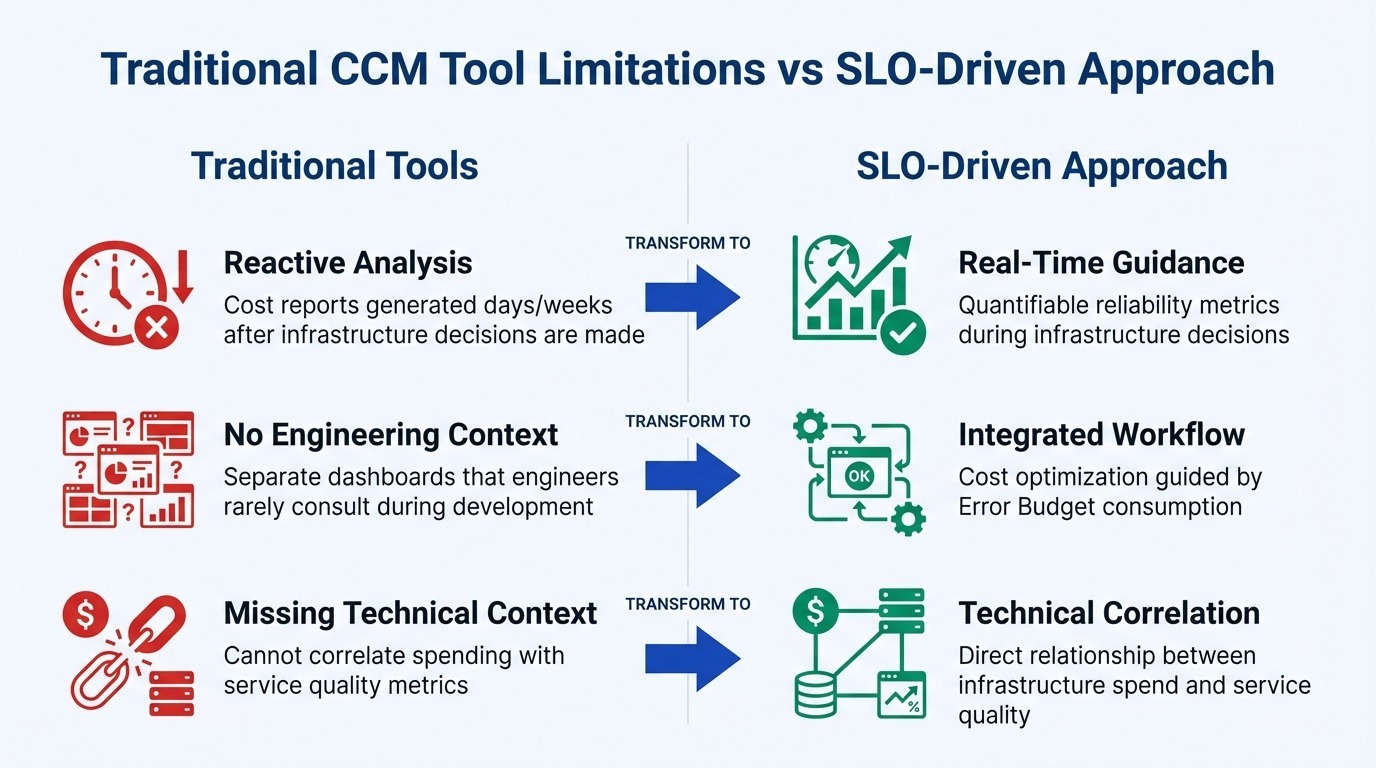
The comparison between traditional and SLO-driven cost management approaches
The architectural problem
Cost management platforms sit outside the engineering workflow, where infrastructure decisions are made. Developers provision resources through Terraform, Kubernetes manifests, or cloud provider consoles. Cost platforms consume billing APIs and generate analytics in separate dashboards that engineers rarely consult during active development. This separation means the tools designed to control costs do not influence the provisioning decisions that determine actual spending.
Cost reports also lack technical context for actionable optimization. A dashboard might show that a particular Kubernetes namespace consumes significant compute resources, but it cannot indicate whether those resources deliver proportional user value. Engineers need to understand the relationship between infrastructure expenditure and service quality metrics, such as latency, error rates, and throughput to make informed optimization decisions. Traditional cost platforms can't provide this context because they don't integrate with observability tooling.
Why engineers rationally default to over-provisioning
Engineering teams consistently over-provision cloud infrastructure, not through carelessness but as a rational response to unmeasured reliability requirements. When teams lack quantified service quality targets and real-time reliability metrics, conservative capacity estimates are the safest way to avoid production incidents.
Consider database instance sizing. An application team provisions an m5.2xlarge instance (8 vCPUs, 32GB RAM) for a PostgreSQL database handling moderate traffic. Profiling shows the database typically uses 3 CPUs and 16GB RAM during peak load, suggesting an m5.xlarge (4 vCPUs, 16GB RAM) would suffice at half the cost.
However, without quantified reliability metrics, engineers cannot correctly evaluate risk. What if query load spikes during a marketing campaign? What if a slow query locks tables and consumes extra resources? The m5.2xlarge provides a safety margin against scenarios the team can imagine but cannot measure.
Challenges in auto-scaling configurations
Follow similar logic. Teams set minimum pod counts to 5 when traffic patterns suggest 2 would handle baseline load, or configure scale-up thresholds at 50% CPU utilization when 70% would still maintain acceptable latency. These conservative thresholds serve as rational insurance against reliability problems when teams lack a quantified metric to determine what is "acceptable." The cost is high; the team pays for 150% excess capacity 24/7, but the alternative is risking production incidents whose costs are unknown but potentially severe.
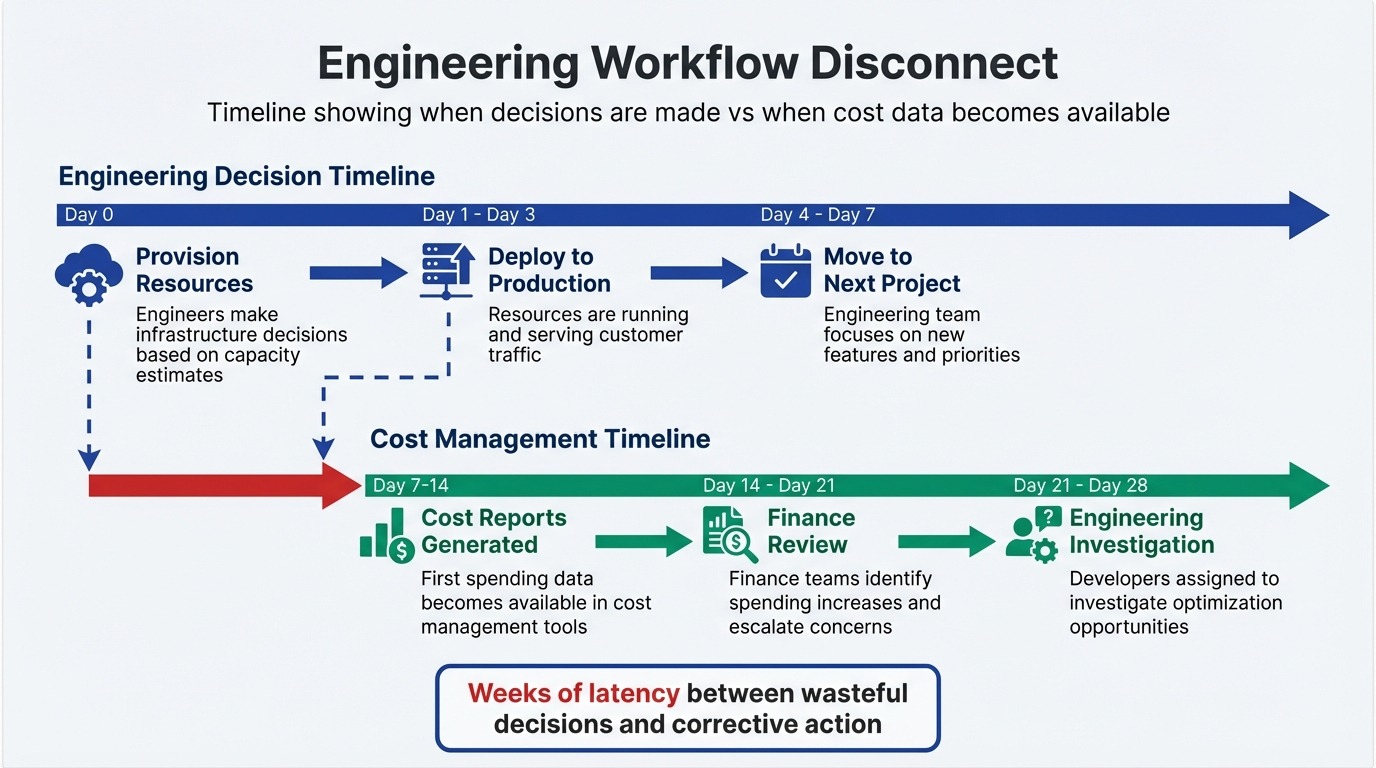
Visualization of a typical engineering workflow and decision-making with cost implications
Resource class selection challenges
It also clearly demonstrates this pattern. AWS Spot instances offer 60-90% discounts but can be reclaimed with two minutes' notice. Azure Low-Priority VMs offer similar savings with a comparable level of interruption risk. For teams lacking reliability measurement frameworks, these cheaper resources are too risky for production workloads. Without quantified service quality metrics, there's no way to determine whether Spot instance interruptions would degrade the user experience unacceptably or remain within tolerable bounds.
The problem compounds across organizational layers. Product teams request "high reliability" without defining what that means quantitatively. Engineering teams interpret this conservatively because reliability failures are career-limiting events while infrastructure overspending is a finance problem. Finance teams see excessive cloud costs but lack the technical context to know whether challenging a capacity decision would actually compromise reliability or simply eliminate waste. Everyone acts rationally within their constraints, producing infrastructure that is systematically wasteful.
Advanced cloud cost management tool features
Advanced cloud cost management tools solve these challenges by providing built-in support for two critical SRE metrics - SLO and error budget.
Quantify cost-reliability with SLOs
Service level objectives provide the quantified reliability measurement that makes cost optimization tractable. An SLO defines acceptable service quality thresholds that inform error budgets. Error budgets provide a clear approach to assess the cost-reliability ratio over measurable experiments.
Example
- Threshold: 99.9% of requests complete in under 500ms over a rolling 30-day window.
- Error budget: The percentage of requests permitted to violate the latency target while still meeting the SLO.
monthly_error_budget = (1 - SLO_target) × total_requests
example: (1 - 0.999) × 10,000,000 = 10,000 slow requests allowed
When a team considers downsizing the database from m5.2xlarge to m5.xlarge, they can deploy the change while monitoring error-budget consumption. If the smaller instance causes query latency to degrade to the point that budget consumption accelerates beyond acceptable levels, the team quantifies the impact and decides whether the cost savings justify the reliability reduction, or reverts to the larger instance before depleting the budget.
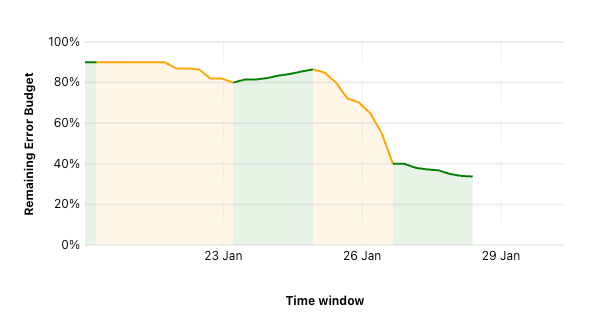
Burn rate evaluation window example
Traditional monitoring alerts when services cross failure thresholds, such as when the error rate exceeds 1% or latency surpasses 1000ms. Error budget tracking measures degradation continuously across the entire distribution of requests. If average latency increases from 200ms to 350ms after downsizing instances, traditional alerts might not fire because requests still complete.
Error budget monitoring detects the problem: more requests now take 400-500ms instead of 150-250ms, accelerating budget consumption and signalling that the optimization degrades service quality.
Advanced cloud cost management tools address the coordination overhead that emerges when teams track error budgets manually across 40+ microservices with distinct reliability requirements. Platforms like Nobl9 automate error budget calculation, aggregation, and alerting.
For example, Nobl9's multi-window burn rate alerting distinguishes rapid error spikes requiring immediate response (5-minute windows) from gradual degradation needing investigation (1-hour windows), preventing alert fatigue while maintaining coverage.
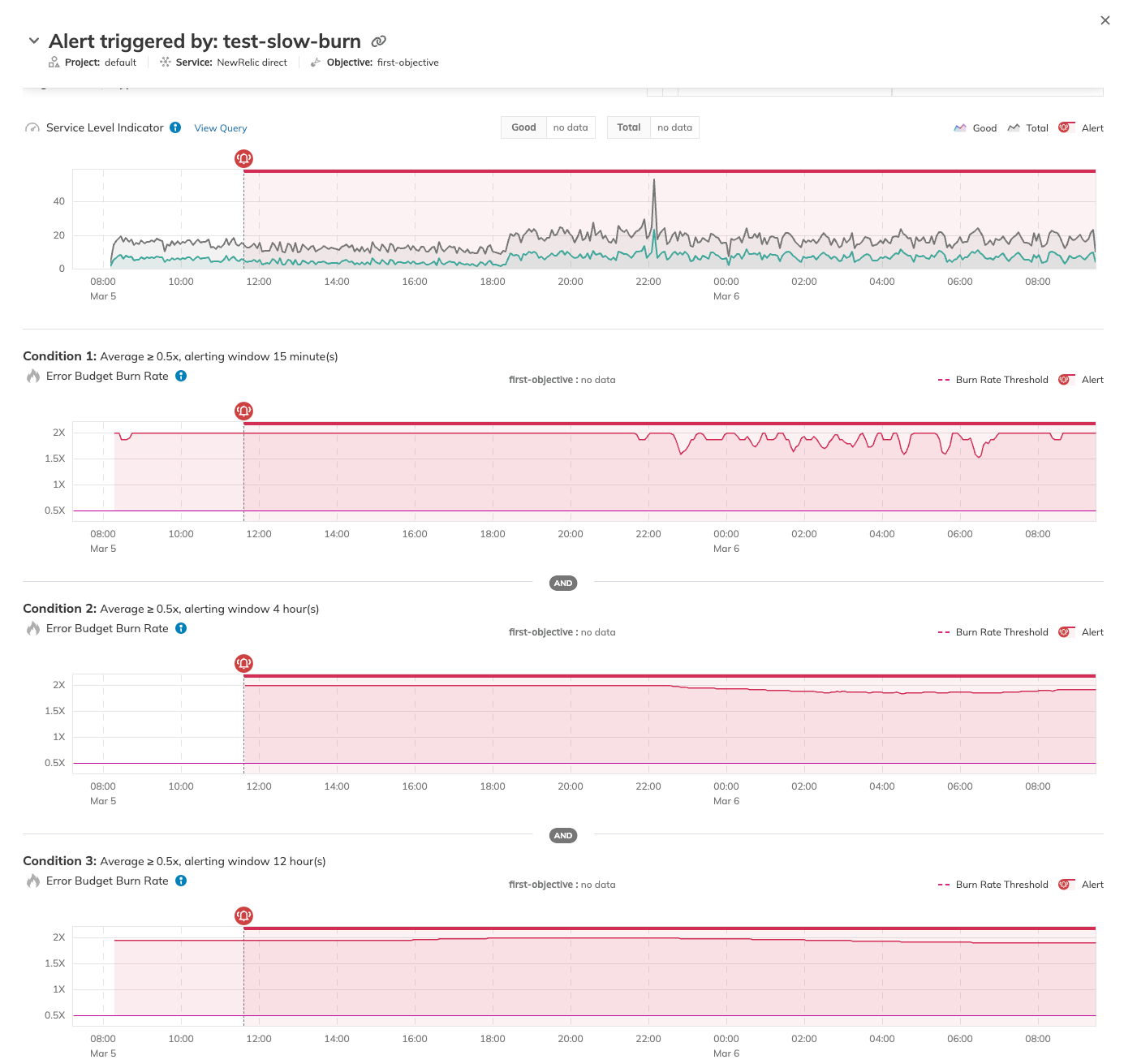
Image 1: Differences in burn rate spikes depending on the alerting window length–12 hours (condition 3) vs 15 minutes (condition 1)
SLOs give product, engineering, and finance teams a shared numerical reference point that replaces vague reliability expectations with explicit, debatable targets.
Support infrastructure optimization through error budgets
Healthy error budgets support aggressive infrastructure experiments that would be too risky without reliability measurement. When a service consumes only 20% of its monthly error budget, the team confidently tests cost optimizations by monitoring whether changes accelerate budget consumption beyond acceptable thresholds.
Aggressive instance right-sizing becomes feasible
Instead of cautiously reducing instance sizes by 10-20% and waiting weeks to assess impact, teams can test 30-50% reductions while monitoring budget burn rate in real-time. Teams can configure automatic rollback triggers based on consumption thresholds. If latency degradation burns 25% of the monthly error budget in a single day, automated systems revert to the previous instance configuration before user impact becomes severe.
The implementation workflow follows a consistent pattern:
- Establish baseline SLO performance by measuring the current error budget burn rate under the existing infrastructure to understand normal consumption patterns and identify optimization headroom
- Deploy infrastructure changes with active monitoring, reducing instance sizes or adjusting auto-scaling parameters while tracking error budget consumption against baseline
- Configure automatic guardrails that trigger rollback before changes consume excessive Error Budget, protecting against optimization failures
Auto-scaling configurations become optimizable
Traditional auto-scaling configurations use conservative minimum pod counts to handle traffic spikes. With error budget monitoring, teams can reduce minimum pod counts by 40-60% and rely on burn rate alerts to detect when scaling responsiveness degrades during unexpected load. Alerts trigger an immediate scale-up before users experience significant impact if a traffic spike causes request queuing to exceed acceptable thresholds and burn the error budget faster.
Cost-optimized resource classes become viable
Spot instances and Low-Priority VMs offer 60-90% discounts but can be preempted with minimal notice, making them too risky for traditional production workloads. Services with healthy error budgets migrate portions of infrastructure to these cheaper resources while monitoring budget consumption. When spot instance preemption causes error rates that exceed burn rate thresholds, automated systems provision on-demand capacity to restore service quality within error-budget constraints.
Platforms like Nobl9 streamline this during multi-service optimization through features such as the Service Health Dashboard. It categorizes services by burn rate severity (green/yellow/red zones). Teams can identify which services have healthy budgets suitable for aggressive optimization and which require a stability focus, coordinating cost-reduction efforts across dozens of services without manual spreadsheet tracking.
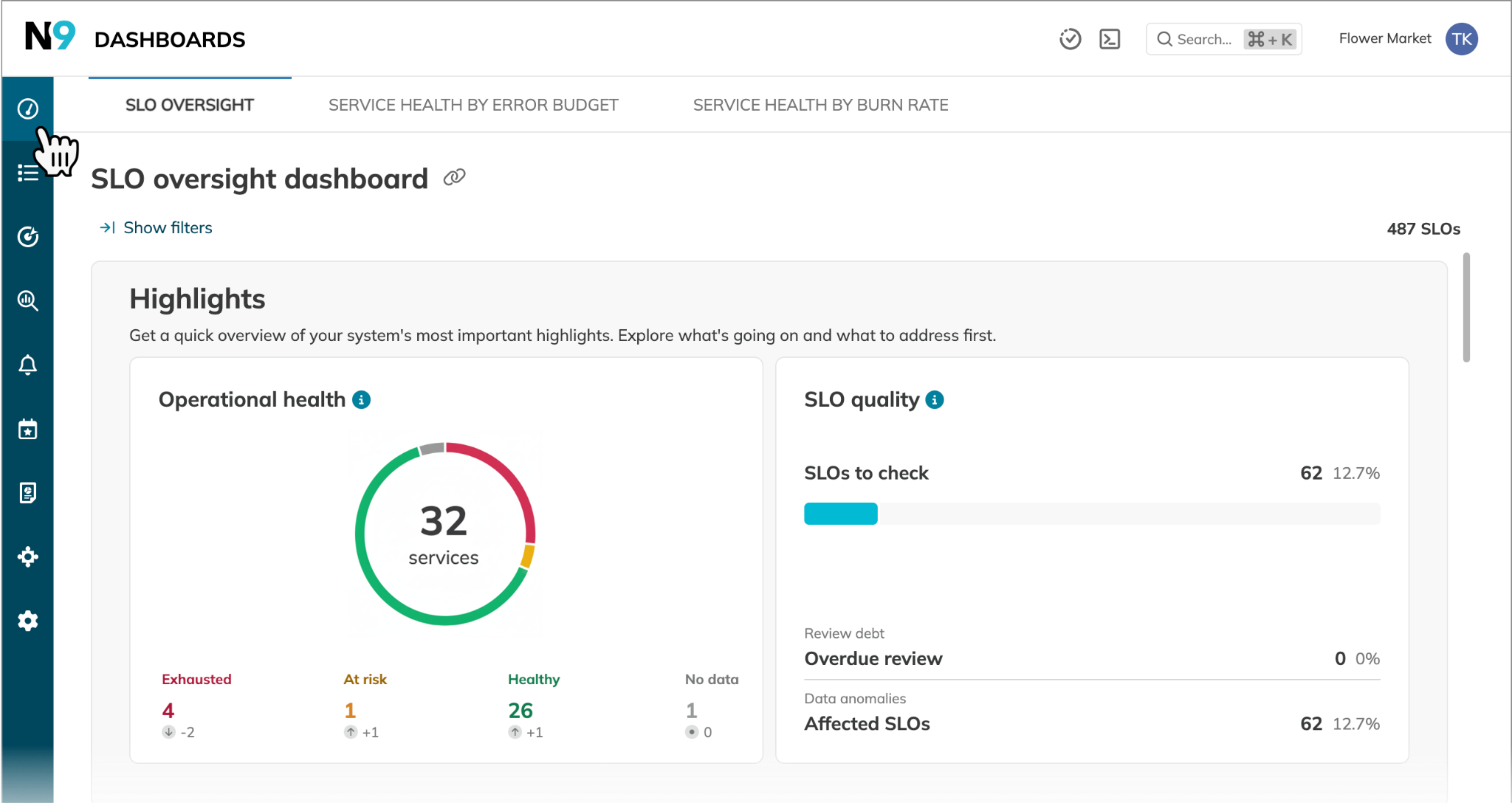
Nobl9’s The SLO oversight dashboard with the Highlights widget
Engineering teams gain objective data for infrastructure tradeoffs rather than debating subjective risk tolerance. Product teams understand the cost implications of reliability requirements, making informed decisions about SLO targets that balance user experience with infrastructure spend. Finance teams receive proactive cost optimization driven by engineering rather than reactive reports highlighting overspending.
Prevent costly reliability incidents through error budget monitoring
Error budget burn rate monitoring provides early warning of reliability degradation, 24-72 hours before problems escalate into user-impacting incidents.
Traditional monitoring detects problems after error rates exceed alert thresholds or users complain. It is often too late to prevent expensive firefighting and customer impact.
The hidden costs of production incidents far exceed infrastructure spending. A two-day incident involving 10 engineers results in $10,000 to $20,000 in opportunity cost due to delayed feature work. Customer churn from reliability problems compounds these costs. If payment processing failures cause 2% of customers to switch competitors, the revenue impact dwarfs any savings from aggressive infrastructure optimization.
Error budget policies formalize reliability investment requirements based on consumption thresholds.
|
Error budget remaining |
Required action |
|
50-100% |
Continue feature development, optimize infrastructure costs within SLO guardrails |
|
25-50% |
Dedicate 20% engineering time to reliability improvements, freeze risky deployments |
|
0-25% |
Full reliability freeze, all engineering resources focused on stability improvements |
These policies provide organizational clarity on reliability priorities without subjective debate. When budget data shows a service has consumed 80% of its monthly allocation in the first week, the decision to pause features and focus on stability follows documented policy rather than emergency judgment calls during active incidents.
Example
Error budget monitoring detects the problem earlier. For example, consider a payment processing service experiencing gradual degradation in database query performance. Traditional monitoring might not alert to elevated latency until queries consistently exceed timeout thresholds and transactions begin to fail.
But when error budgets are used, if query latency increases from 200ms to 350ms, the error budget burns faster as more requests miss latency targets. Burn rate alerts fire when consumption accelerates beyond normal patterns, prompting investigation while the service still meets its overall SLO.
When a service depletes a significant error budget, teams pause feature development and focus engineering time on reliability improvements such as database query optimization, cache tuning, or infrastructure scaling.
Advanced cloud cost management tools automate policy enforcement through configurable alerting. For example, Nobl9's Error Budget alerting supports threshold configuration (warning at 25% remaining, critical at 10%) and integrates with PagerDuty and Slack, escalating notifications as budgets deplete without manual monitoring.Example advanced cloud cost management tool
Putting advanced cloud cost management into practice requires tooling that tracks error budgets continuously across services and integrates with the cost and observability tooling teams already use.
Nobl9 is built specifically for this, combining multi-window burn rate alerting, Composite SLO tracking across microservices, and integrations with tools like PagerDuty, Datadog, and Prometheus.
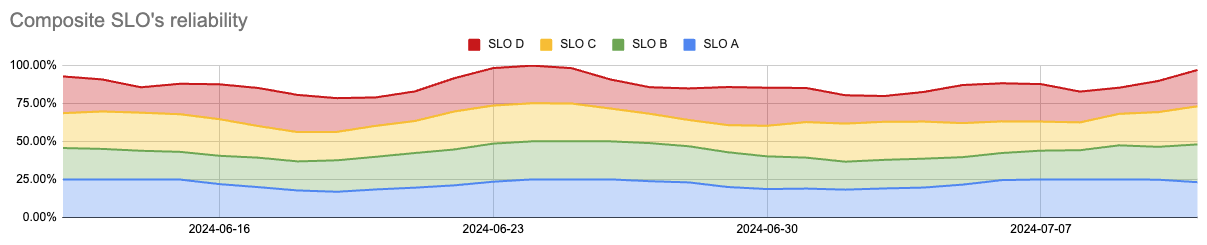
Composite reliability sample
One practical consideration: during load testing or chaos engineering experiments, teams need to exclude planned degradation from error budget calculations to avoid false positives.
Nobl9's error budget adjustments feature handles this by allowing temporary exclusions during known testing windows, keeping measurements accurate without penalizing intentional reliability work.
Navigate Chapters: